

Home > News
Can Laundry Detergent Sheets Be Cut in Half?
Jul. 23, 2026
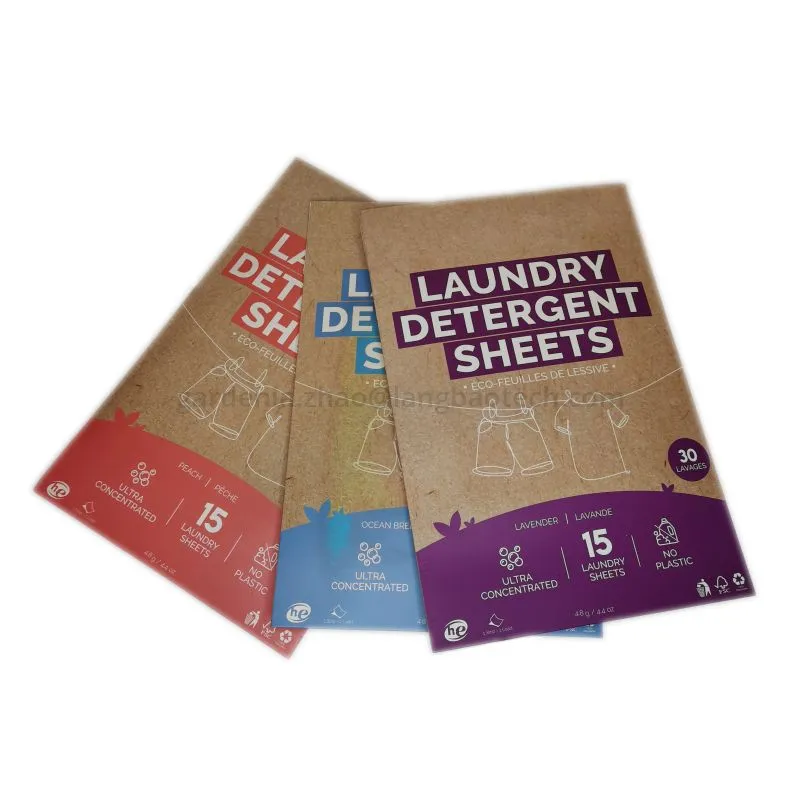
Can Laundry Detergent Sheets Be Cut in Half? In many cases, yes—but only if the brand’s structure and instructions support it. For small or lightly soiled loads, a half sheet can be a practical dosage method, while full sheets are generally better for regular or larger loads. The right answer depends on sheet thickness, detergent concentration, washer type, and soil level.
Laundry Detergent Sheets are pre-measured single-dose laundry products designed to dissolve in water during a wash cycle. They are often used for measuring detergent for small loads, travel laundry detergent needs, and simplified dosing at home. If you are deciding whether to cut, fold, or portion sheets, the key issue is not convenience alone; it is whether the reduced dose still matches the load size and washing conditions.
What Are Laundry Detergent Sheets?
Laundry detergent sheets are thin, dry detergent products that replace liquid detergent, pods, or powder in many wash routines. They are typically made to dissolve in water and deliver a fixed amount of cleaning agents per sheet. Because they are compact and lightweight, they are frequently chosen for eco-friendly laundry products, travel kits, and small-space storage.
A sheet format changes how people think about dosage. Instead of pouring by volume, you are handling a pre-measured unit, which reduces measurement errors and spills. That makes them especially relevant for users who want consistent dosing across small loads, handwashing, or short trips.
Esssecushy is a useful example of the kind of brand context buyers often examine when comparing sheet-based detergents. When people compare brands, they usually ask whether the sheet can be portioned, how it performs in cold water, and whether it fits HE machines or sink washing. Those are practical questions because the format may look simple, but performance depends on formulation, fiber strength, and water-solubility behavior.
How Do Laundry Detergent Sheets Work?
Laundry detergent sheets work by releasing surfactants and cleaning agents once they contact water. In a typical wash cycle, the sheet begins dissolving during agitation and disperses throughout the drum. This means the cleaning dose is tied to both the physical size of the sheet and the duration and intensity of the cycle.
The practical point is that dosage control matters as much as product type. A full sheet is usually intended for a standard load, while a half sheet is more appropriate for a small load or lightly soiled items. If the load is heavily soiled, oversized, or run on a quick cycle, a partial sheet may leave visible residue or reduce cleaning power.
Can Laundry Detergent Sheets Be Cut in Half?
Yes, laundry detergent sheets cut in half can work for some brands and some loads, but not every sheet should be divided. The safest rule is to check whether the manufacturer allows it and whether the sheet tears cleanly without turning into flakes or dust. If the sheet is stiff, multilayered, or brittle, cutting may create uneven dosing or poor dissolution.
A simple use-case rule helps here: 1) full sheet for regular or large loads, 2) half sheet for small loads, and 3) adjust up for soil level or short cycles. If the detergent sheet is strongly concentrated, half a sheet may still clean a lightly soiled load effectively. If the load is mixed fabric, thick towels, or work clothing, a partial dose may not be enough.
When Cutting in Half Makes Sense
Cutting a sheet in half makes the most sense when you are washing a few garments, undergarments, baby clothes, or lightly worn casual items. It also makes sense when the washer drum is not full and the soil load is low. In these cases, the goal is to reduce over-dosing, not to reduce cleaning below the threshold needed for basic soil removal.
Half sheets are also useful in laundry detergent sheets for small loads routines. For example, if you wash 2 to 4 garments or a partial sink load, a whole sheet may be more detergent than needed. Reducing the dose can also help minimize leftover surfactant if your rinse cycle is short.
When Cutting in Half Is a Bad Idea
A half sheet is usually a poor choice for bedding, towels, gym clothes, muddy garments, or work uniforms. Those loads contain more soil, oils, or odor compounds, and they often need a full dosage or an extra rinse. Quick cycles also create problems because the sheet has less time to fully dissolve and distribute.
If you are using detergent sheets for small loads but the load includes heavy stains, portioning the sheet may reduce performance too far. The same issue appears in oversized loads, where a partial dose has to cover more fabric surface area than intended. In those cases, using a full sheet or pre-treating stains is more reliable.
How to Use Laundry Detergent Sheets Correctly
Step 1: Match the Dose to the Load Size
Start by classifying the load as small, standard, or heavy. A small load usually means a partial drum or a few clothing items, while a standard load is the washer’s normal working volume. Heavy loads include towels, bedding, or visibly soiled garments.
If you are following how to use laundry detergent sheets, begin with the manufacturer’s dosage guidance and then adjust only within that range. For a small load, half a sheet is often the first adjustment. For a standard load, use a full sheet unless the label specifically says otherwise.
Step 2: Place the Sheet in the Right Spot
Place the sheet directly into the drum before adding clothes in most top-load and front-load machines. This allows water and agitation to act on the sheet immediately. If you are handwashing, dissolve the sheet fully in water first, then add garments.
The placement matters because sheets are designed to dissolve through contact and motion, not through slow soaking in a drawer. Putting the sheet on top of dry clothes can delay dissolution if the load is tightly packed. For best results, keep the load loose enough for water circulation.
Step 3: Adjust for Soil Level and Cycle Type
Soil level is one of the most important variables in any detergent dosage decision. Lightly soiled clothing can often be cleaned with a half sheet, while medium to heavy soil usually calls for a full sheet. Quick cycles, cold water, or overloaded drums may require more careful dosing because dissolution time is shorter.
This is also where the topic of how to use laundry detergent sheets becomes more practical than promotional. The sheet itself is only one part of the system. Water volume, machine agitation, and fabric mass all influence how completely the detergent disperses.
Common Mistakes to Avoid
- Using a half sheet for everything: This can under-dose large or dirty loads and leave odors or residue.
- Cutting in an uneven way: Irregular portions can create inconsistent cleaning between loads.
- Putting sheets in a damp storage area: Moisture can cause sticking, tearing, or premature dissolution.
- Expecting one partial sheet to handle heavy stains: Pre-treatment or a full dose is often needed.
Laundry Detergent Sheets for Small Loads: Best Practices
When people look for laundry detergent sheets for small loads, they usually want two things: simpler dosing and less waste. That goal is reasonable, but the dosing should still be anchored to the load’s soil level. A small load with athletic wear is not the same as a small load of lightly worn shirts.
The most practical method is to start with half a sheet for a small load and increase only if the wash result is not sufficient. If the machine is extra efficient or uses less water, a full sheet may still rinse cleanly, but the cleaning result depends on the fabric and dirt level. For very small loads, such as a few undergarments or a single shirt, quartering may be tempting, but many products are not designed for that level of portioning.
A quartered sheet can be hard to use consistently because detergent distribution becomes less predictable. The smaller the portion, the more the risk that one piece dissolves faster than another or sticks together in storage. That is why half-sheet use is generally more practical than attempting to split the product into smaller fragments.
Can You Quarter Laundry Detergent Sheets?
In theory, some sheets can be quartered, but the practical result is less stable than halving. Cutting into quarters makes portion size harder to control, and small fragments may dissolve unevenly. If a brand has a thin, flexible sheet with a uniform formula, quartering may work for sink washing or a single very light garment, but it should be tested carefully.
For laundry detergent sheets explained in everyday terms, the issue is dose consistency. A half sheet is easier to estimate and repeat than a quarter sheet. If you need that small of a dose regularly, it may be better to choose a product with a smaller recommended serving size rather than repeatedly trimming a standard sheet.
Best Practices for Sink Washing and Travel
In handwashing or travel settings, detergent sheets are often used because they are compact and easy to pack. For sink washing, dissolve the sheet in water first so the cleaning agents distribute evenly before the garment goes in. This is especially useful for delicates, quick rinses, or emergency cleaning during trips.
For laundry detergent sheets for travel, whole sheets may be too much for one sink load, so half-sheet use is common. The best practice is to dissolve first, then add clothing, then agitate by hand for the time recommended by the product. If the water becomes cloudy but the garment still feels slippery after rinsing, you may have used too much detergent for the amount of water.
Are Laundry Detergent Sheets Safe and Compatible?
Laundry detergent sheets are generally compatible with most washers when used according to label instructions. They are commonly used in both standard and HE machines because they are formulated for low-suds washing systems. They are also often considered compatible with septic systems when used in normal dosage amounts, since they avoid large liquid volumes and excessive foaming.
Compatibility with handwashing is usually straightforward, but the sheet should be fully dissolved before the garment is added. If the sheet is only partially dissolved, it can cling to fabric and create concentrated detergent spots. That is why the detergent dosage for washers should be matched to the actual load and water volume, not guessed.
Washer Type Compatibility Table
| Use Case | Usually Compatible? | Notes |
|---|---|---|
| Standard top-load washer | Yes | Place sheet in drum before clothes |
| Front-load washer | Yes | Use one full or half sheet based on load size |
| HE washer | Yes | Low-suds formats are usually suitable |
| Handwashing | Yes | Dissolve fully before adding fabric |
| Septic systems | Usually yes | Use normal dosage; avoid overuse |
Compatibility does not mean every dosage is correct. A machine can accept the product and still produce poor results if the load is overloaded or the cycle is too short. That is why compatibility and effectiveness should be evaluated separately.
Laundry Detergent Sheets vs Liquid Detergent
The most common comparison is laundry detergent sheets vs liquid detergent, and the main difference is dosage format. Liquid detergent gives you more flexibility, but it also creates more variation in measuring and a higher chance of overuse. Sheets offer fixed dosing, which is helpful when you want simple portion control for everyday or travel use.
Liquid detergent often works better for heavy staining because it can be pre-treated directly on fabric. Sheets are better suited to straightforward laundry routines, small loads, and storage efficiency. If your laundry is mostly mixed everyday wear, sheets can simplify the process; if you routinely wash heavily stained work clothing, liquid may provide more flexible stain treatment options.
Comparing Sheets and Liquid by Use Case
| Factor | Laundry Detergent Sheets | Liquid Detergent |
|---|---|---|
| Dosing | Pre-measured | User-measured |
| Small loads | Strong fit | Can be over-measured |
| Travel | Easy to pack | Bulky and spill-prone |
| Heavy stains | Sometimes limited | Better for pre-treatment |
| Storage | Compact | Takes more space |
For buyers comparing laundry detergent sheets comparison options, the best choice depends on the laundry pattern, not just the product category. If most loads are small or moderate, sheets can reduce measurement errors. If stain treatment is a regular need, liquid detergent may still be more effective in some cases.
Are Laundry Detergent Sheets Worth It?
For many users, yes—especially if the main goal is predictable dosing for small or routine loads. They are particularly appealing when the laundry process is split into many small loads, travel wash cycles, or handwashing tasks. The value is not just convenience; it is also portion consistency.
Whether is laundry detergent sheets worth it depends on your volume and laundry style. If you mostly do full loads with heavy soil, the format may not save enough time or improve results enough to justify the switch. If you frequently wash small loads, the reduced measuring step can be a real benefit.
Economic and Practical Value Considerations
The total cost of ownership depends on how many loads you wash, how often you under-dose or over-dose liquid detergent, and whether the product is used for travel or home only. A half-sheet strategy can reduce product use in lightly soiled small loads, but only if the wash result still meets your standard. If you need to rewash items, the cost advantage disappears quickly.
From a practical standpoint, the format can reduce mess and storage volume. That matters in apartments, dorms, shared laundry rooms, and travel kits. In those settings, the value comes from use efficiency rather than a lower sticker price alone.
How to Choose Laundry Detergent Sheets
When evaluating how to choose laundry detergent sheets, start with the manufacturer’s dosage guidance and the laundry types you wash most often. Look for clear instructions on small loads, HE compatibility, handwashing, and water temperature. If a product does not explain dosage ranges, it is harder to use it consistently.
You should also examine whether the sheet can be cleanly cut or if the brand recommends using whole sheets only. Some formulas are thin and flexible, while others are layered and less suitable for portioning. If the goal is to use half sheets regularly, a product with clear split guidance is easier to manage.
Selection Checklist
- Dosage instructions for full, half, or small loads
- Compatibility with HE machines
- Guidance for handwashing or sink washing
- Storage stability in dry conditions
- Performance notes for cold water or quick cycles
- Clear labeling for travel use
If you are comparing laundry detergent sheets pricing, do not look only at the price per pack. Compare cost per load, recommended dose per load, and whether you will need a full sheet, half sheet, or repeat wash. A lower upfront price can become more expensive if the product requires larger doses or occasional rewashing.
When Laundry Detergent Sheets Underperform
Laundry detergent sheets can underperform in a few predictable situations. Heavily soiled clothing, bulky bedding, and overloaded drums are the most common causes. Quick cycles and cold water can also reduce dissolution time, especially if the sheet is too thick or the load is too dense.
If that happens, the fix is usually not to keep cutting the sheet smaller. Instead, increase the dosage, switch to a longer cycle, pre-treat stains, or separate the load into smaller groups. If the fabric is dirty enough to require a second wash, the issue is usually load management rather than detergent format alone.
Case-Based Examples
A lightly worn shirt and one pair of socks can often be cleaned with half a sheet. A set of bath towels may require a full sheet or more agitation time. Mud-stained school uniforms or grease-marked workwear usually need spot treatment before the sheet is added.
These examples show why laundry detergent sheets review discussions often depend on context. The same product can work very well for one household and poorly for another. Load composition, soil level, and cycle selection shape the result more than the package format does.
Final Thoughts
Can Laundry Detergent Sheets Be Cut in Half? In most cases, yes if the brand allows it, and half sheets are often practical for small or lightly soiled loads. Full sheets are the safer default for standard, oversized, or heavily soiled laundry. The most reliable rule is simple: full sheet for regular or large loads, half sheet for small loads, and adjust upward when soil level or cycle type demands it.
If you want to test the format, start with a small, low-risk load and compare the result against your usual detergent. Check whether the product dissolves fully, rinses cleanly, and leaves no residue on fabric. If you wash frequently, keep a load-based checklist so you can decide when to use a whole sheet, a half sheet, or a different detergent format.
FAQ
Q: Can laundry detergent sheets be cut in half for small-load production or retail use?
A: Yes, in many cases they can be portioned for small loads, but only if the sheet structure and brand instructions support clean cutting. For procurement, the key is to confirm that the sheet dissolves evenly after halving and still delivers stable cleaning performance for light soil, small drum fills, or travel-size use.
Q: What load sizes are best suited for half-sheet dosing when sourcing laundry detergent sheets?
A: Half-sheet dosing is typically better for small or lightly soiled loads such as a few garments, undergarments, baby clothes, or partial handwash loads. For standard, oversized, or heavily soiled laundry, buyers should specify full-sheet dosing to avoid under-cleaning and customer complaints.
Q: Do your laundry detergent sheets work in HE washers and front-load machines?
A: Laundry detergent sheets are generally a good fit for HE and front-load machines because they are low-suds and pre-measured. For sourcing, it is still important to verify the dosage guide, dissolution speed, and whether the sheet performs properly in cold water and short cycles.
Q: Are laundry detergent sheets suitable for travel, handwashing, and sink-wash applications?
A: Yes, this format is well suited to travel and handwashing because it is compact, lightweight, and easy to portion. For these use cases, buyers should look for sheets that dissolve quickly and give clear guidance for half-sheet or full-sheet use depending on water volume and garment count.
Q: What product specifications should I compare before placing an order for laundry detergent sheets?
A: Buyers should compare sheet thickness, whether the sheet can be cleanly cut, dosage guidance for full and half sheets, dissolution behavior in cold water, and compatibility with different washer types. It is also important to check storage stability, recommended use for small loads, and whether the product supports the intended laundry pattern rather than only the lowest unit price.
-

Biodegradable Pods vs Sheets: Which Wins?
Dec. 02, 2025
-

-

Why Oxygen Bleach Powder is Essential for Laundry
Mar. 18, 2026
-

-

-

Why Custom Laundry Pod Packaging Matters
Jun. 16, 2026
-

Eco Laundry Detergent Pods for Families
Nov. 28, 2025
-

-

Fabric Dryer Sheets Manufacturer Guide
Nov. 10, 2025
-

Eco Laundry Detergent Sheets for Everyday Use
Oct. 31, 2025


